
The De-extinction method has been developing for several years now with the aim to bring dead species back to life. Scientists have thought of several ways to realize this idea of resurrection and they include gene transfer, interspecies cloning and surrogate birthing. All of the three methods involve specific genetic knowledge and skills, which will be applied in the analysis of DNA taken from specimens and fossils of extinct animas and plants.
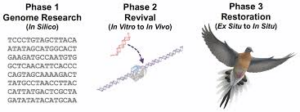 Cloning has most of the attention until now, due to all of the experiments appeared in cinematography. It has several steps to complete the process of cloning, as the first one is getting DNA from the specie. After the DNA is gotten, some parts of it will be a bit disorganized or missing and the second step is to put everything into place to create the genome of the specie.
According to a paleontologist Michael Archer, there are two ways of using the completed thylacine genome. The first is to combine the nucleus of a lab-created thylacine cell with an egg of another specie with similar genome and physical characteristics, that had its nucleus removed. The resulting embryo could be implanted into the uterus, resulting in the birth of the specie wanted (3).
Surrogate birthing is more complicated for plants, because the de-extinction has to bring back lost genotypes and phenotypes, so the other two methods will be more successful.